
Yoga Is Not Just Stretching
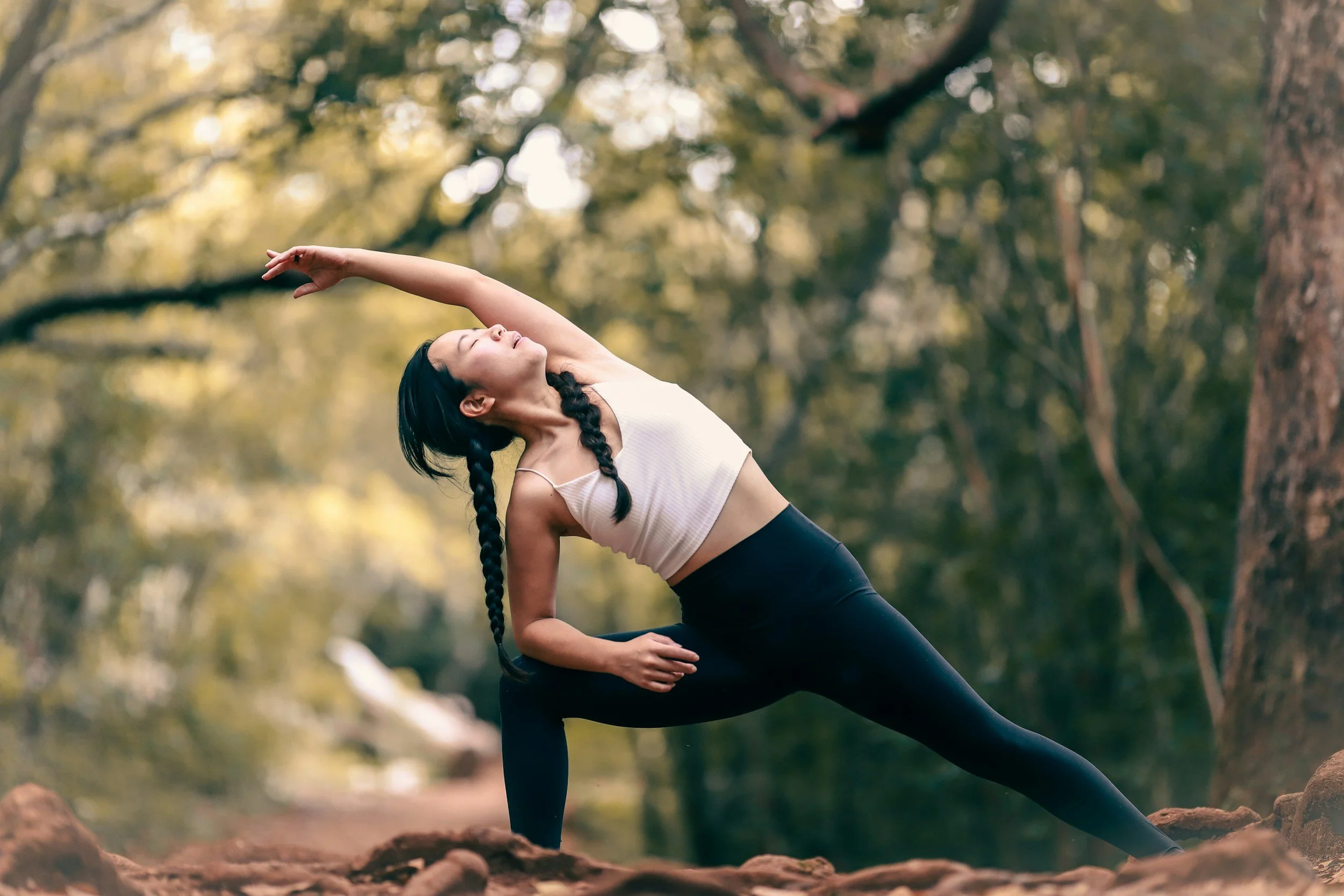
The most common thing people say when they tell someone they do yoga is that they are not very flexible, usually offered as a preemptive disclaimer, as if flexibility is a prerequisite rather than an occasional side effect. The misconception behind that disclaimer runs deeper than most people realize, and it shapes how a lot of students approach the practice in ways that limit what they get from it.
Yoga is not primarily a flexibility practice. It is a strength practice, a balance practice, a breath practice, a concentration practice, and a system for developing a more honest relationship with your own body. Flexibility is one possible outcome of consistent training, and for some bodies it comes easily and for others it does not come much at all. But a student with limited flexibility who shows up and practices with genuine attention is doing yoga in the fullest sense. A student with extraordinary natural flexibility who moves through poses without breath awareness or internal focus is doing something more like gymnastics.
The strength demands of yoga surprise most people who have not tried it. Holding Warrior Two for sixty seconds, which is not a long time, requires significant work from the legs, hips, and core. Chaturanga, the low push-up position that appears constantly in vinyasa sequences, is a genuinely demanding upper body exercise. Balancing poses like Warrior Three and half moon require the standing leg, hip stabilizers, and core to work hard and work together. Arm balances like crow require upper body and core strength that most new students have to build deliberately over months. The idea that yoga is gentle movement for people who cannot handle real exercise is not supported by what actually happens in a yoga class.
What yoga adds to strength training that other formats do not is the integration of breath, attention, and body awareness with the physical effort. A bicep curl is a bicep curl. It has a clear mechanical function and the mind is largely optional. In yoga, the quality of attention you bring to a pose directly affects what the pose does. A warrior sequence practiced with full breath awareness, genuine engagement of the muscles, and honest assessment of alignment is a fundamentally different experience from the same sequence rushed through while thinking about something else. The physical and the mental are being trained simultaneously, which is part of what makes the practice useful in ways that extend beyond the mat.
Balance is another dimension that gets underestimated. The ability to stand on one leg, which sounds simple and is actually quite demanding, requires coordination between the vestibular system, proprioception, visual input, and the muscles of the foot, ankle, hip, and core working in precise relationship. This kind of neuromuscular coordination does not develop from flexibility training. It develops from balance training, which yoga provides consistently and in progressive complexity. Students who practice regularly tend to notice improvements in how they move through everyday life: navigating stairs, catching themselves when they trip, moving through tight spaces without bumping into things. These are direct outcomes of the balance work, not the stretching.
The breath work in yoga, pranayama in Sanskrit, is its own category of training that has measurable effects on the nervous system, cardiovascular function, and mental clarity. Breath practices like ujjayi, alternate nostril breathing, and extended exhale breathing activate the parasympathetic nervous system, improve the efficiency of gas exchange in the lungs, and build the kind of breath control that athletes across many disciplines spend significant time developing. This is not relaxation in the soft sense. It is physiological training with real effects.
Yoga's roots in Indian philosophy add another dimension that no amount of flexibility addresses. The practice was designed as a system for reducing the mental patterns that produce suffering: distraction, reactivity, over-identification with the ego, and the habitual avoidance of difficulty. These are addressed through the physical practice, but the poses are the medium, not the point. A student who practices asana with genuine attention to breath and sensation, who notices when the mind wanders and returns it without drama, is working on something that goes well beyond what any stretch can accomplish.
At Emerald, we see the flexibility misconception play out regularly with new students. They arrive apologizing for their hamstrings and leave surprised by how much their arms and legs worked. They come in thinking yoga will be easy compared to what they usually do and discover that the challenge is real, just differently distributed than they expected. After a few weeks, the apologies about flexibility tend to disappear, because the students have realized that flexibility was never the point.
If you have been putting off trying yoga because you are not flexible enough, that reason does not hold up. The practice does not require flexibility to begin, and it does not reward flexibility above other qualities once you are in it. What it rewards is showing up, paying attention, and being honest about where you are. Those things are available to any body at any starting point, and they are what the practice is actually built on.