
What Savasana Is Actually For
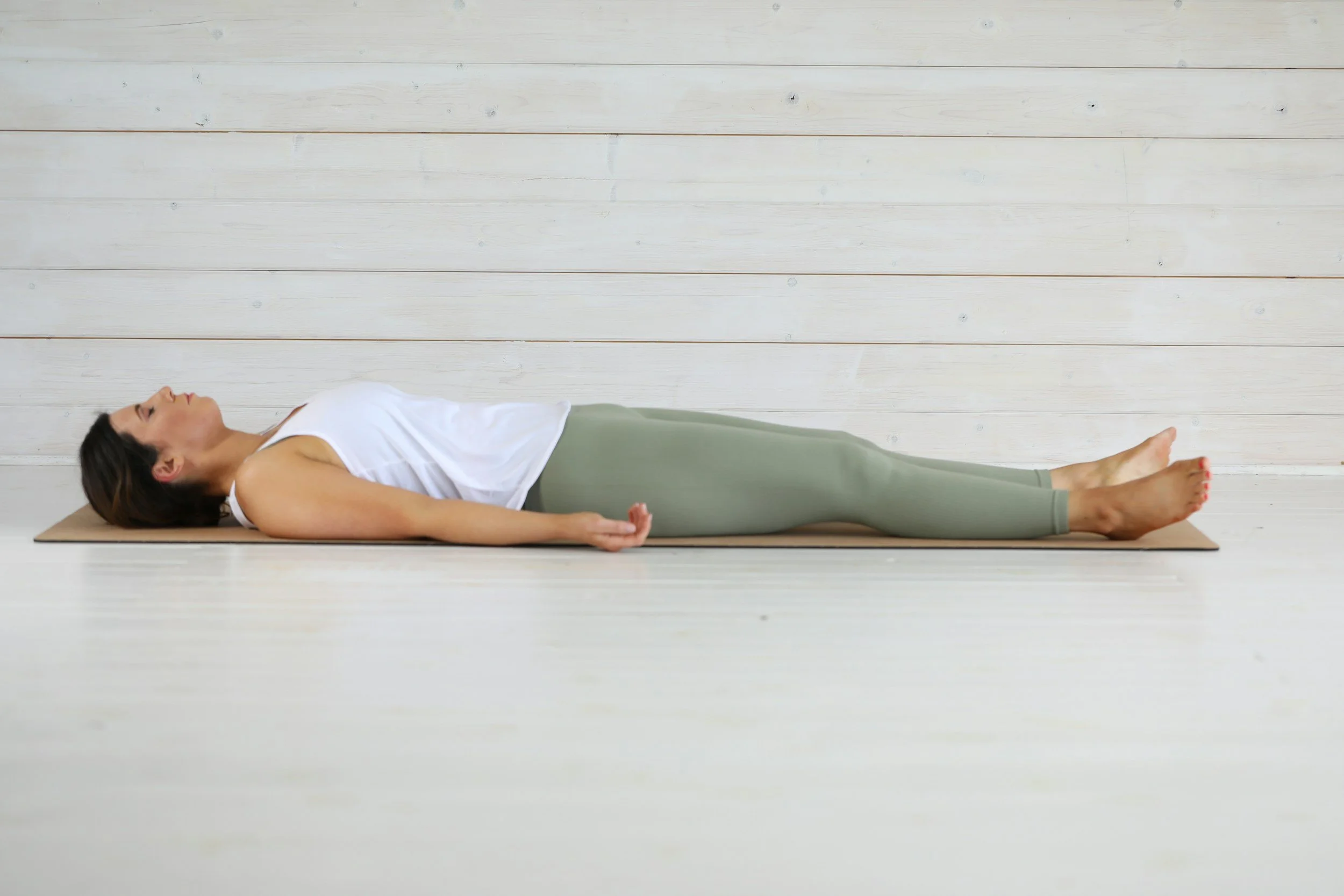
It is the pose that looks the easiest and is often the hardest. You lie down on your back, close your eyes, and stay still. That is it. And yet, if you have spent any time in a yoga class, you already know that savasana, the final resting pose, can be surprisingly difficult to settle into. Your mind wanders to your grocery list. You feel an itch you suddenly need to scratch. You wonder if it would be rude to leave a few minutes early.
These reactions are not signs that you are doing it wrong. They are actually part of why savasana exists.
In Sanskrit, savasana means "corpse pose." That name is not meant to be morbid. It is pointing toward something specific: a temporary release of all effort, all agenda, all grasping. In yoga philosophy, the practice of dying to the moment, of completely letting go, is considered one of the most advanced things a human being can do. Not because it is dramatic, but because it runs so counter to how most of us move through our days.
We are trained to be productive, to be useful, to be doing something. Lying still on a mat at the end of a yoga class with nothing to show for it can feel almost uncomfortable in that context. There is a word in yoga philosophy for the mental restlessness that makes stillness so hard: chitta vritti, which Patanjali, in the Yoga Sutras, describes as the fluctuations of the mind. One of the central aims of yoga practice is to quiet those fluctuations. Savasana, it turns out, is not the reward at the end of class. It is one of the primary practices.
There is also something happening in the body during savasana that matters a great deal. When you move through a yoga practice, you are creating heat, stimulating the nervous system, building strength, and asking muscles to engage and release in new ways. The body needs time to absorb that work. Savasana is when integration happens. Skipping it, or rushing through it, is a little like baking a cake and taking it out of the oven too early. The effort you put in during the rest of class has not had time to settle.
Research on the nervous system supports this. The physical practice of yoga tends to activate the sympathetic nervous system, the alert, responsive part of us. Savasana gives the parasympathetic nervous system time to come online, which is what allows the body to genuinely rest and recover. Heart rate slows. Blood pressure drops. Muscles release tension they have been holding without you even noticing.
For many students, savasana is the first time they have actually stopped all day. Not slowed down. Stopped. This is more unusual than it sounds, and more valuable. Some teachers describe it as the moment the practice truly begins, after all the movement has done its work.
If you find your mind very busy during savasana, that is completely normal and not a problem. You do not need to force silence or blank your thoughts. What you are practicing is the ability to notice thoughts without chasing them. You observe the grocery list arising, and you do not start mentally writing it. You let the thought pass like a cloud and return your attention to your breath, to the weight of your body on the mat, to the simple fact of being here. That is the practice. It may feel small, but it is the same practice at the heart of meditation, and it has a cumulative effect over time.
Some people find savasana deeply emotional. It is not uncommon to feel a sudden wave of grief, release, or even unexpected joy. This makes sense. When you stop doing, when you stop managing yourself, things that have been pushed aside sometimes surface. This is not something to be alarmed by. It is the body doing what bodies do when they finally feel safe enough to let go.
If you have been leaving class before savasana, or lying there waiting for it to be over, we gently invite you to try staying with it, even just for a few breaths. Let the mat hold you. Let the room be quiet. There is nothing else required of you in those few minutes. That, in itself, is a practice worth showing up for.
At Emerald, we close every class with savasana, and we mean it. If you would like to explore what stillness feels like in a warm, unhurried space, we would be glad to have you on the mat with us.