
What Nobody Tells You About Owning a Yoga Studio
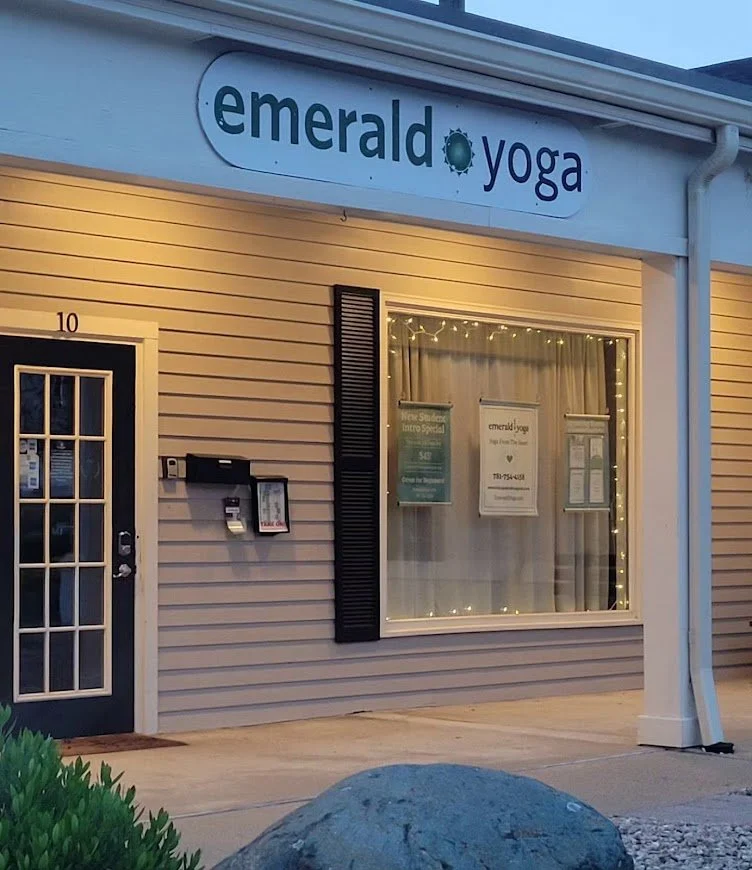
This is my life's work and I mean that without reservation. Seven years of devotion to this place is also what gives me the standing to be honest about the parts that have been genuinely hard.
People ask me fairly often what it is like to run a yoga studio, and the honest answer is that it is one of the most rewarding things I have ever done and also one of the most humbling. When I imagined studio ownership before I did it, I pictured the community, the classes, the conversations that happen when people practice together over years.
But I want to be transparent that what I did not picture was the sheer volume of invisible work that exists underneath all of that, and I definitely did not picture what I eventually learned about a certain subset of the yoga teaching world. I know I’m not alone in this because I’ve read my fair share of articles from Yoga Journal on this exact phenomenon.
The invisible labor is the thing that surprises almost every studio owner I have talked to, regardless of how prepared they thought they were going in. There is the scheduling, the payroll, the maintenance requests, the email threads that never seem to fully resolve, the social media that requires constant tending, the ordering of supplies, the conversations with landlords, the accounting, the insurance renewals, the teacher coordination, and the thousand small decisions that have to be made every week just to keep the doors open and the experience good for the people who walk through them. None of this appears in the romanticized version of what a yoga studio is. All of it is real and most of it is invisible to everyone except the person doing it.
I do not say this to complain. I say it because I wish someone had said it to me, and because the gap between the fantasy and the reality of studio ownership is wide enough that it catches a lot of people off guard in ways that affect their health, their relationships, and their ability to sustain the thing they worked so hard to build. The work is worth it 100%. It is also substantially more work than it looks like from the outside.
The other surprise, the one I find harder to talk about but think is important to name, is what I learned about yoga teachers. Not all of them, and not even most of them. But enough of them that I was genuinely shaken by it in the early years of owning Emerald.
I came into this work with the assumption that people who had devoted themselves to yoga, who had completed teacher trainings and built practices and stood in front of rooms full of students, would be operating from the same set of values that the practice describes. The yamas and niyamas, the ethical framework at the foundation of Patanjali's eight-limbed path, include principles like ahimsa (non-harming), satya (truthfulness), asteya (non-stealing), and brahmacharya (the right use of energy). These are not obscure or advanced teachings. They are introduced in the first weeks of any serious teacher training.
What I encountered instead, with a frequency that genuinely surprised me, was teachers who stole money or products from us, who showed up unprepared or not at all, who were less than honest about their intentions, and who marketed their own businesses using relationships and visibility built on studio time and studio community, in some cases continuing to do so after they left, taking client information from our software with them. Some of it was petty. Some of it caused real damage. All of it was a collision between what the practice says and what certain people who teach it actually do.
The harder part was deciding how to carry it. When a teacher left under difficult circumstances, students would ask where they had gone and we would give a vague answer, because getting into the details felt like a violation of something we were trying to uphold. Those same students would often say they really liked that person, not knowing what had happened behind the scenes. Staying quiet was the right choice and also a strange one, because it meant absorbing the damage without the relief of naming it.
I want to be careful here because the yoga teaching community also contains some of the most genuinely ethical, generous, and skilled people I have ever met. The teachers who show up, who care deeply about their students, who hold the practice with integrity and bring that integrity into every interaction: they are real and they are not rare and those are some of the people who you’ve seen at Emerald for years and years. The studio exists because of them and I am grateful for them in ways I probably do not say often enough.
But there is a version of the yoga world that uses the language and aesthetics of the practice as a kind of social currency without doing the actual work that the philosophy describes. The eight limbs of yoga are not a branding framework. They are a way of living that requires ongoing, honest self-examination and a genuine commitment to causing less harm. A teacher training certificate does not confer that. Years of practice do not automatically produce it either. It has to be chosen, repeatedly, in situations where choosing it costs something.
What I know now that I did not know when I started is that the practice is harder than the poses, and that the people who understand this are usually the ones who make good teachers and good colleagues. They are also, in my experience, the ones who do not need much managing. They show up, they do the work, they treat the community with care, and they operate from a baseline of honesty that makes everything else easier.
The community that has grown around this studio is the thing I am most grateful for, without qualification. The people who come to class week after week, who have supported each other through difficult years, who have become genuinely important to one another: that is what I hoped for when I started and it turned out to be even better than I imagined. That part of the dream was accurate.
The rest of it, the labor and the hard lessons about who people actually are when things get complicated, has made me a more realistic and I think a better studio owner.
And still after nine years of teaching, on any given morning when the room fills up and the practice begins, none of that is what I am thinking about. The community is what I am thinking about. It always has been and I am grateful for the soul changing work this studio has given me.