
Our Favorite Yoga Mats: Recommendations From the Teachers at Emerald
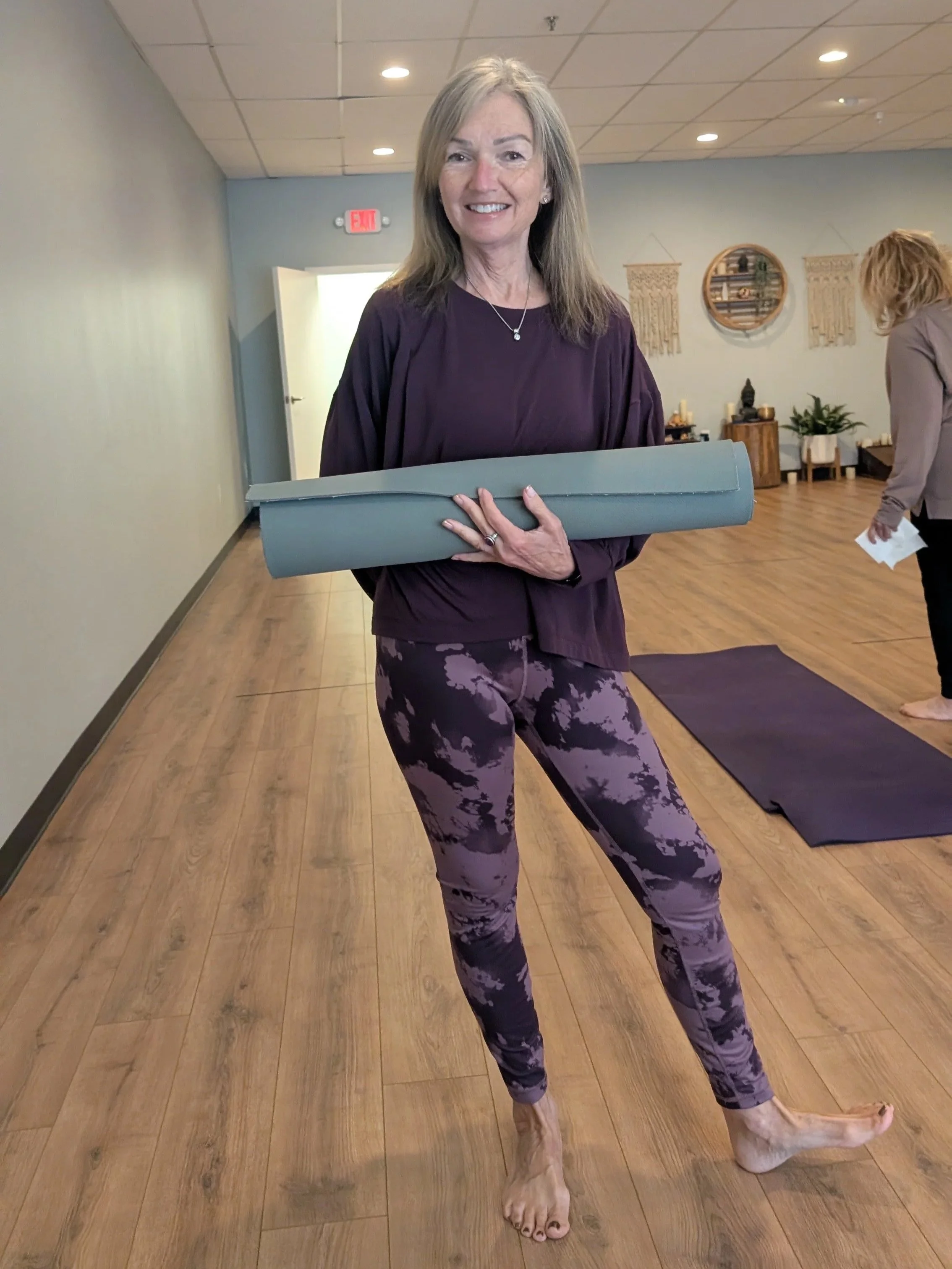
One of the most common questions we get from new students is some version of: do I need to buy my own mat, and if so, which one? The studio has mats you can borrow while you are getting started, so there is no pressure to invest immediately. But once you know yoga is going to be a regular part of your life, having your own mat makes a real difference. It becomes familiar in a way that borrowed equipment never quite does.
We asked our teachers what they actually use, and the answers were honest and specific in the way that only comes from years of regular practice. Here is what they said.
Landen has been using a Jade Harmony for eight years and reports that it is still holding up well. That kind of longevity is worth paying attention to. Jade mats are made from natural rubber tapped from rubber trees, which gives them a grip that tends to improve with use rather than degrade. They are also one of the more environmentally considered options on the market. For a beginner looking for something durable and reliable that will not need replacing every couple of years, the Jade Harmony is a strong choice.
Lauren uses a Liforme, which came up more than once in our conversations, and also uses an Oko Living yoga rug that she genuinely likes. The Liforme is known for its alignment grid, a system of lines and markers printed into the mat surface that can be genuinely useful when you are learning where your hands and feet are supposed to go. It is on the higher end of the price range, but practitioners who invest in one tend to keep them for a long time. The Oko Living rug is a different category entirely: a woven cotton rug traditionally used in Mysore-style Ashtanga practice that provides grip when it gets warm and absorbs sweat well. It is worth knowing exists even if it is not a beginner's first purchase.
Ellen uses the Manduka Eko, which sits in a good middle range between price and performance. Like the Jade, it is made from natural rubber and has a texture that handles sweat reasonably well without being so grippy that it interferes with transitions. It is slightly lighter than some of the other natural rubber options, which matters if you are carrying your mat to and from class regularly.
Ryan uses two Manduka products: the Pro and the GRP Adapt. The Manduka Pro is one of the most durable mats available and comes with a lifetime guarantee, which tells you something about how the company stands behind it. It is dense and has very little give, which some practitioners prefer and others find uncomfortable on a hard floor. The GRP Adapt is Manduka's grip-focused mat, designed specifically for practitioners who sweat heavily and need consistent traction throughout a class. Both are investments and both are built to last.
Vienna recommends the original Liforme, which she is specific about. Liforme has released several versions over the years and Vienna's preference for the original is something a number of experienced practitioners share. If you go this route it is worth doing a little research into which one you’d like to start with.
Hannah's recommendation is the Lululemon The Mat 5mm, which she notes is reversible and treated to be antimicrobial. It is a good option for practitioners who cannot use natural rubber mats due to latex or rubber allergies, since it is made from a synthetic base that delivers solid grip and cushioning without the materials that cause reactions for some people. The 5mm thickness puts it in a comfortable range for floor work without sacrificing too much ground connection in standing poses.
Jen says she’s still seeking out the perfect mat (and that’s okay too!) because there are so many different options and considerations when choosing.
A few practical things worth knowing before you buy. Mat thickness matters more than most beginners expect. A thinner mat gives you more connection to the floor, which helps with balance, but offers less cushioning for knees and wrists. A thicker mat is more comfortable for floor work but can make balancing poses feel less grounded. Most of the mats recommended here fall in the four to five millimeter range, which works well for most people. Weight is worth considering if you are commuting to class. And if you are buying a natural rubber mat, be aware that they can have a strong smell when new that dissipates over time.
There is no single right answer for everyone. The best mat is the one that fits your practice, your budget, and your body. Starting with one of these recommendations means you are starting with something that a working yoga teacher has put real time on, which is about as reliable an endorsement as you can get.